
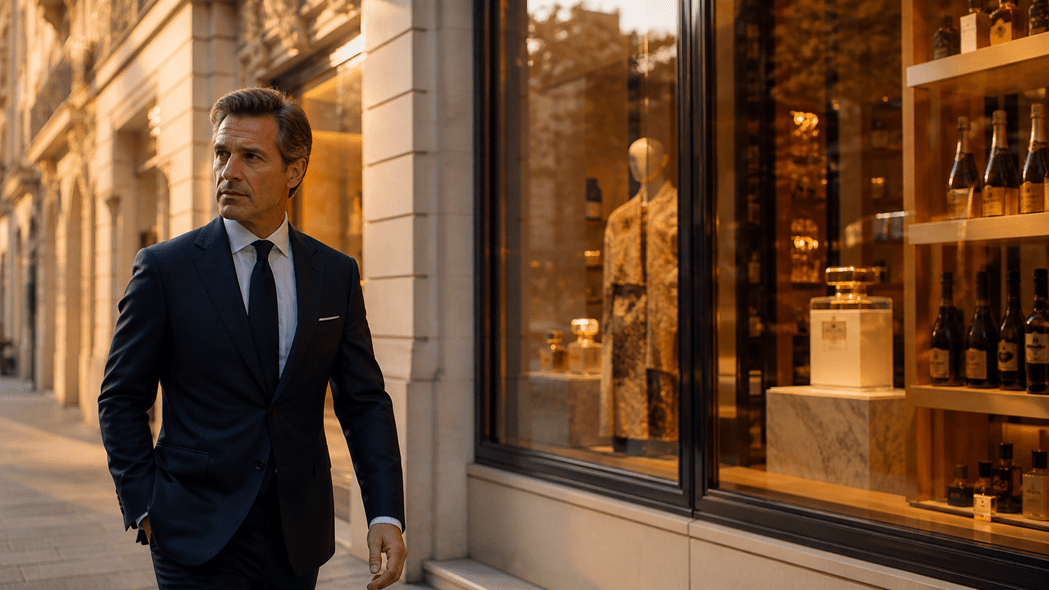
After years of expansion, the group led by Bernard Arnault is reportedly assessing a major portfolio rationalisation. According to the Financial Times, Marc Jacobs, Fenty Beauty, Joseph Phelps and other non-core assets may be under review. Not a retreat, but the clearest signal yet of a new cycle for global luxury.
LVMH is not simply considering the sale of a few brands. It is confirming that global luxury has entered a different season: stricter, more selective, less tolerant of anything that does not generate margins, centrality and desirability.
After years of acquisitions, international growth and industrial consolidation, the French giant led by Bernard Arnault is reportedly examining one of the broadest reorganisations in its recent history. According to the Financial Times, the group has begun assessing possible disposals across several sectors, including fashion, beauty, wines and spirits.
Among the assets mentioned are Marc Jacobs, the stake in Fenty Beauty, founded by Rihanna, and Joseph Phelps Vineyards, the Californian wine producer that entered the group’s orbit in recent years. LVMH has not commented on the reports.
The news matters because it concerns the group that, more than any other, has shaped the contemporary idea of luxury as a system: maisons, retail, culture, craftsmanship, celebrity, hospitality, media, wines, fragrances and jewellery.
An empire of more than 75 brands, €80.8 billion in 2025 revenue and over 6,280 stores worldwide.
From buying to choosing
For decades, LVMH turned acquisition into an industrial discipline. It bought brands, reorganised them, injected capital, strengthened distribution, controlled image, built retail architecture and applied managerial power. From Louis Vuitton to Dior, from Fendi to Bulgari, from Tiffany & Co. to Loro Piana, the logic was clear: to build a conglomerate capable of dominating every high-end segment of global consumption.
Today, however, the centre of gravity is shifting. The question is no longer only which maisons to add, but which assets truly deserve to remain within the group’s perimeter.
The shift is crucial. LVMH does not appear to be relinquishing its power; it is refining it. In a more fragile market phase, even the world’s luxury giant must distinguish between strategic brands and peripheral holdings, between profit engines and less decisive activities, between symbolic heritage and the real ability to generate value.
According to the reports, the review would mainly concern areas considered less central or more exposed to the slowdown. In beauty, Make Up For Ever and Fresh are said to be under examination, while LVMH’s 50% stake in Fenty Beauty has reportedly been valued by JPMorgan analysts at between €1.5 billion and €2.5 billion. The future of Marc Jacobs appears more uncertain, after talks with Authentic Brands Group over a possible sale worth around $1 billion reportedly failed to reach an agreement.
Marc Jacobs, Fenty Beauty and the weight of the portfolio
The Marc Jacobs case carries particular significance. The American brand, which entered the LVMH group in 1997, is not just another asset. It embodies a story linked to New York fashion, pop culture and the relationship between creativity and the American market.
Yet in the new luxury cycle, symbolic capital is no longer enough. Profitability, clear positioning and the ability to compete in a less expansive market have become essential.
Fenty Beauty tells a different story: that of a beauty brand built on the force of a global celebrity, inclusive representation and rapid digital recognition. Founded by Rihanna, the brand helped redefine the language of contemporary cosmetics. But a possible exit by LVMH from its stake would signal a clear intention: to concentrate resources on more controllable internal pillars, from Dior Beauty to Guerlain, where the group can govern product, distribution, image and profitability more directly.
In wines and spirits, attention would instead be focused on Joseph Phelps Vineyards and Cuban rum brand Eminente. This is not a technical detail. The Wines & Spirits division has been among the most exposed to recent difficulties, particularly due to the cooling of cognac demand and a less dynamic international market compared with the post-pandemic boom years.
In 2025, recurring operating profit in the division fell to €1.016 billion, compared with €1.356 billion in 2024 and €2.109 billion in 2023.
The numbers behind the slowdown
The portfolio review comes within a financial picture that remains solid, but less euphoric. In 2025, LVMH recorded revenue of €80.8 billion, recurring operating profit of €17.8 billion and an operating margin of 22%. Group net profit amounted to €10.9 billion. These are still imposing figures, but lower than the exceptional growth levels that followed the post-pandemic luxury rebound.
The first quarter of 2026 also confirmed a less linear market. LVMH reported revenue of €19.1 billion, with organic growth of 1% but a 6% decline on a reported basis, also penalised by currency effects. Fashion & Leather Goods, the group’s most strategic division, posted a 2% organic decline, while Wines & Spirits rose organically by 5%, Watches & Jewelry by 7% and Selective Retailing by 4%.
The message is clear: luxury is not retreating, but it is no longer running with the same natural momentum.
The United States remains an important market, Asia excluding Japan has shown signs of improvement, while Europe and Japan have been affected by lower tourist spending. In the background, geopolitical instability, more cautious consumers, pressure on aspirational clients and price levels that have risen sharply in recent years are all weighing on demand.
Disposals already underway
The possible new wave of disposals would not come out of nowhere. In recent months, LVMH has already lightened its portfolio.
In September 2024, the group sold Off-White to Bluestar Alliance, closing a complex phase for the brand founded by Virgil Abloh. In January 2025, Stella McCartney bought back the minority stake held by LVMH in her maison, while maintaining her relationship with the group as Global Ambassador on Sustainability.
In January 2026, LVMH also reached an agreement to sell DFS operations in Hong Kong and Macau, along with intangible assets in Greater China, to China Tourism Group Duty Free Corp, in a transaction reported by Reuters at around $395 million.
These are different operations, but they belong to the same broader design: reducing exposure to less central sectors or brands, freeing capital, protecting margins and concentrating managerial attention on the group’s true pillars.
Louis Vuitton, Dior and the new centrality of flagship maisons
In this new scenario, Louis Vuitton and Dior remain the heart of the LVMH system. They are the maisons that best embody the group’s ability to combine craftsmanship, commercial power, direct retail, product culture and global narrative control. Around them, much of the conglomerate’s strength is built.
The rationalisation should therefore be read as a return to discipline. The next luxury cycle will not necessarily reward the largest groups, but those capable of making every part of their portfolio perform. Critical mass remains essential, but it cannot turn into dispersion. Every brand must have a function, every category must support profitability, every investment must reinforce the overall system.
In this sense, selling can become an act of strength. Not simply because it generates cash in the short term, but because it allows the group to reaffirm a hierarchy: what is not essential can leave, what is strategic receives more capital, more attention and more managerial energy.
The Armani Dossier and the italian question
A possible portfolio review does not mean that LVMH has stopped looking at new acquisitions. According to recent reports, the group has been indicated among potential interlocutors for a minority stake in Armani, within the framework that emerged after the succession of the Italian designer.
Such a move, however, would not be simple. It would require investment, time and a long-term strategy capable of preserving the maison’s identity while strengthening its international competitiveness.
For Italy, the issue is highly significant. Armani is one of the last great independent fashion houses capable of representing a complete idea of elegance, creative control and personal entrepreneurship. An eventual entry by LVMH, even as a minority shareholder, would alter the balance of European luxury and reopen the debate over the industrial sovereignty of Italian fashion.
The matter, however, must be treated with caution. Selling peripheral or less profitable assets is one thing. Entering a maison of Armani’s historical stature is another. In that case, finance would not be enough. What would be needed is a respectful grammar, capable of supporting growth without diluting identity.
Luxury after the boom
The real news, then, is not only that LVMH may sell Marc Jacobs, Fenty Beauty or Joseph Phelps. The real news is that global luxury is leaving behind the era of almost automatic expansion.
The aspirational clientele that fuelled much of the post-pandemic performance is now more exposed to pressure on disposable income. Prices, which have risen significantly in recent years, have raised the threshold of entry. China no longer guarantees the same acceleration. International tourism remains relevant, but more vulnerable to geopolitical shocks.
In this scenario, desire does not disappear. It becomes more selective. And selectivity imposes a new discipline on luxury groups.
LVMH knows this well. Its power does not come only from size, but from the ability to organise luxury as an industrial architecture. Today that architecture is being tested, lightened and perhaps corrected. The message to the market is clear: not everything that belongs to a great group is destined to remain there forever.
The strength of knowing what to keep
Bernard Arnault built the most important luxury empire of the modern era by buying with clarity, patience and timing. Now the test is different: to sell without appearing weak, to concentrate without seeming defensive, to cut what weighs on the group without compromising its overall allure.
It is a sophisticated test, perhaps more difficult than the age of acquisitions. Buying tells a story of ambition; selling requires judgement. And in mature luxury, judgement is worth as much as capital.
The future of high-end luxury will be decided by those able to distinguish what creates value from what merely occupies space. In this new geography of desire, greatness will not coincide with accumulation, but with precision.
Read the italian article: https://www.milanoluxurylife.it/lvmh-cessioni-marc-jacobs-fenty-beauty-lusso/
Sources consulted: Financial Times, LVMH financial releases, Reuters, Associated Press, FashionNetwork, Vogue Business.
